




The faculty of the University of Virginia’s College of Arts & Sciences voted Wednesday to pilot the first significant, comprehensive changes to the College’s undergraduate student curriculum in more than 40 years.
Read more
Before there was big science or big data, there was big humanities. Until the last third of the nineteenth century, the natural and physical sciences imitated many of the methods and practices of the humanities, especially disciplines like philology, which pioneered techniques in data mining, the coordination of observers, and the collection and sorting of information—what Lorraine […]
Read more
The Andrew W. Mellon Foundation awarded Assoc. Prof. Chad Wellmon a New Directions Fellowship last month in support of his proposal for a new course of study in the cross-disciplinary field of digital textual analysis. The $177,000 Mellon grant will support the efforts of Wellmon to deepen his understanding of emerging digital archives and how […]
Read more
Ireland prides itself on the relatively high proportion of its young people who have higher-education qualifications. But Friedrich Nietzschewould not be impressed. The German philosopher saw the democratisation of higher education as an affront to genius.
Read more
The main figures that populate our historical accounts of the Enlightenment are human—be they enemies of Enlightenment, such as the priest or the tyrant, or defenders like the philosophe or Aufklärer. [3] But in Kant’s essay, “What is Enlightenment?” (1784), the first figure, identified ahead of the pastor “who has a conscience for me” and […]
Read more
The main figures that populate accounts of the Enlightenment are human–be they enemies of Enlightenment, such as the priest or the tyrant; defenders such as the philosophe or Aufklärer; or intellectuals socially assembled in coffee houses or salons, exercising opinion in rational, critical debate.[1] But in his 1784 essay, “What is Enlightenment?,” the first figure […]
Read more
When people talk about inequality these days, they typically mean economic inequality, disparities in income, assets, or other financial measures. But inequalities come in other forms as well, and the academy is home to some of the more entrenched and persistent ones. To those who think the democratizing effects of gender equality and digital technology […]
Read more
With the 50th anniversary of the National Endowment for the Humanities approaching, one might be surprised by the continuing debate over the humanities’ relevance in higher education. One camp argues they are foundational to a rounded education; another says professional degrees should fill the menu. The dispute was stirred anew in September when Japan’s education ministry […]
Read more
When Max Weber suggested in 1917 that the world had been disenchanted, he meant that modernity was best understood by the expansion of “technical means” that controlled “all things through calculation.” The real power of these technical means lay not in the techniques and technologies themselves but in the disposition of those who used them, […]
Read more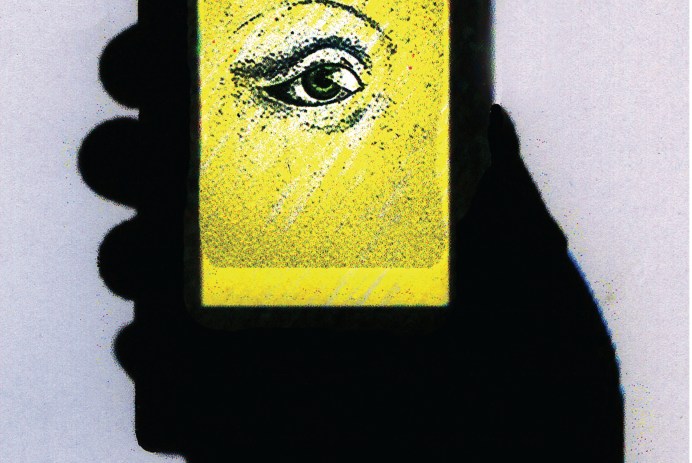
During the summer of 2014, two Cornell University scholars and a researcher from Facebook’s Data Science unit published a paper on what they termed “emotional contagion.” They claimed to show that Facebook’s news feed algorithm, the complex set of instructions that determines what shows up where in a news feed, could influence users’ emotional states. […]
Read more chadwellmon.com